Lori Schoenwiesner and Cassi Camara were invited to hear two art educators speak to fellow teachers at the Virginia Independent School Association annual conference about what they’d learned during an earlier “EnviroLearn” series event led by Schoenwiesner and Camara.
The teachers had been “so moved by” the EnviroLearn experience, Schoenwiesner said, that they applied to present at the conference, where they shared lessons learned through EnviroLearn in the hopes of inspiring other teachers to include environmental education concepts into their instruction.
That moment was particularly rewarding for Schoenwiesner and Camara, who head up the Office of Environmental Education at the Virginia Department of Conservation and Recreation. The office’s entire focus is to help grow environmentally literate K-12 graduates in Virginia.
That’s not done by solely connecting science and agriculture teachers with environmental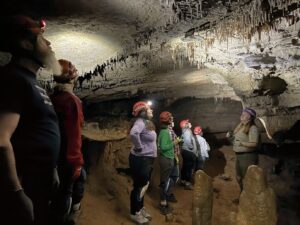 and conservation education, but also art, history and potentially literature teachers, as well. Those classroom teachers are going to reach many children, Schoenwiesner said.
“It’s not our job to tell what’s being taught; the teachers are the experts,” she said. “We see our role as putting them in contact with the support they need.”
The office’s mission is accomplished through different avenues, but each with the same goal.
Meaningful Watershed Educational Experience (MWEE) grants help students gain a deeper understanding of issues related to their watershed. The goal is to provide learner-centered experiences that focus on issues or questions about the watershed and should involve hands-on investigation.
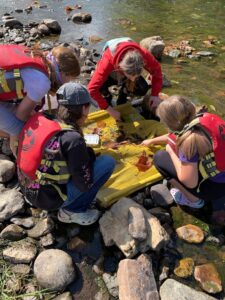
In 2024, $382,421 was awarded to 14 recipients, providing watershed educational experiences to more than 15,400 K-12 Virginia students and supporting the instruction of more than 425 K-12 Virginia educators, according to the Office of Environmental Education’s website.
Three Virginia soil and water conservation districts are some of the more recent MWEE grant recipients.
Schoenwiesner and Camara have also helped develop Virginia’s K-12 Environmental Literacy Strategic Plan, which is awaiting state approval. The plan aims to integrate environmental education and outdoor learning into the educational experience of all elementary, middle and high school students in the state, according to the office’s website.
And then there’s EnviroLearn.
The program allows educators to attend a three-day outdoor learning session, often at state parks, which is a no-cost, hands-on professional development experience for public, independent and homeschool K-12 educators. Up to 20 educators are chosen to attend. The next one – which will focus on healthy soil — will be at Claytor Lake State Park in southwestern Virginia March 31 to April 2.
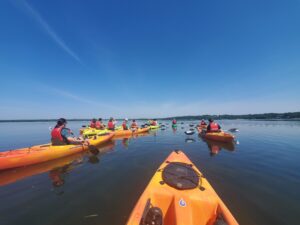
A more recent past EnviroLearn was at Chippokes State Park, south of Williamsburg and within the Chesapeake Bay watershed.
The three-day experience doesn’t end when the teacher returns home. Support for the teachers continues and Schoenwiesner and Camara send them home with supplies and follow their progress for a year, supporting them as they implement their choices in the classroom. That might include connecting them with the U.S. Geological Survey, Department of Forestry, state parks, soil and water conservation districts, NGOs and more.
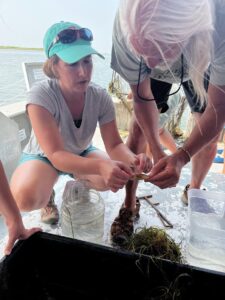
The pair sees themselves as “connectors” or “silo breaker-downers,” Camara said.
Connections made on site during the EnviroLearn events have also been rewarding.
“We’ve been thrilled to see the connections the parks (staff) make with some of the educators beyond us,” Schoenwiesner said.
Schoenwiesner and Camara also see the value in coming from different backgrounds and seeing things through different lenses.
“I am partnered with the most fun person on Earth,” Schoenwiesner, who spent 23 years as a classroom educator, said.
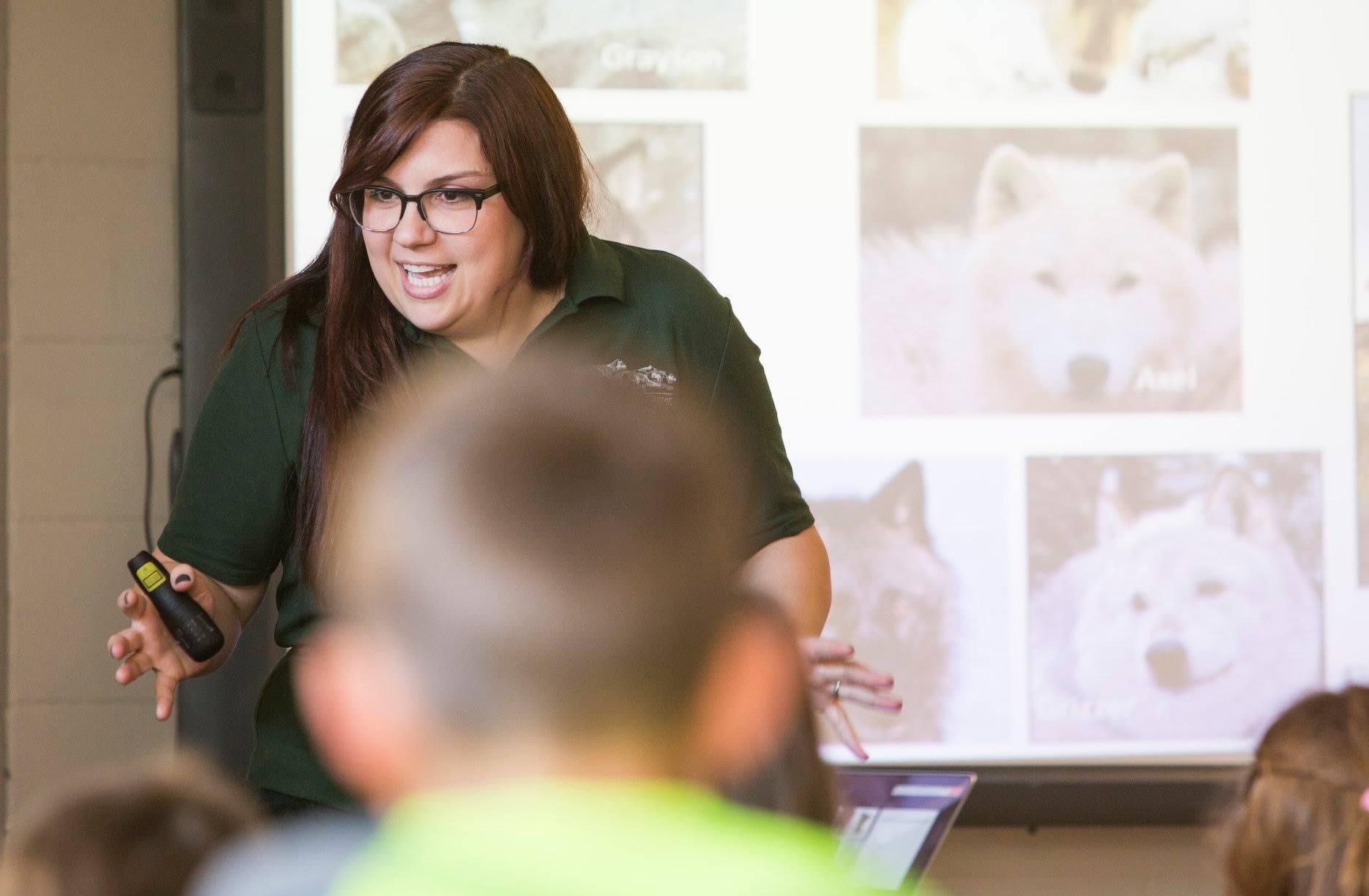
Camara was previously an outreach educator for the International Wolf Center and a research associate on wildlife disease and welfare projects. She is completing her Ph.D. in human dimensions of natural resources at Colorado State University. Her work includes research on media portrayals and outreach strategies for wolf reintroduction in Colorado, and consulting for the European Union on carnivore coexistence and youth-focused communication initiatives.
With Virginia being a very diverse state, Schoenwiesner and Camara have sought to market the Office of Environmental Education’s offerings in unique ways to reach all areas. They’ve created a series of environmental education games that get distributed around the state and includes their contact information.
They’re also relying on word of mouth through the partnerships they’ve made since the office first began its work in 2023 to help relay their message and achieve “small incremental relationship building,” Camara said.
And they seek to take the EnviroLearn sessions across the state to reach educators from all over. Their first one was at Natural Tunnel State Park in the far southwestern corner of the state, near the borders with both Kentucky and Tennessee.
“We will get to every corner of this great state,” Camara said.