“Steal shamelessly.”
David Williams, director of the North Carolina Division of Soil and Water Conservation, often uses the phrase to describe one of the National Association of State Conservation Agencies’ most successful traditions: conservation professionals sharing ideas, programs and solutions with one another.
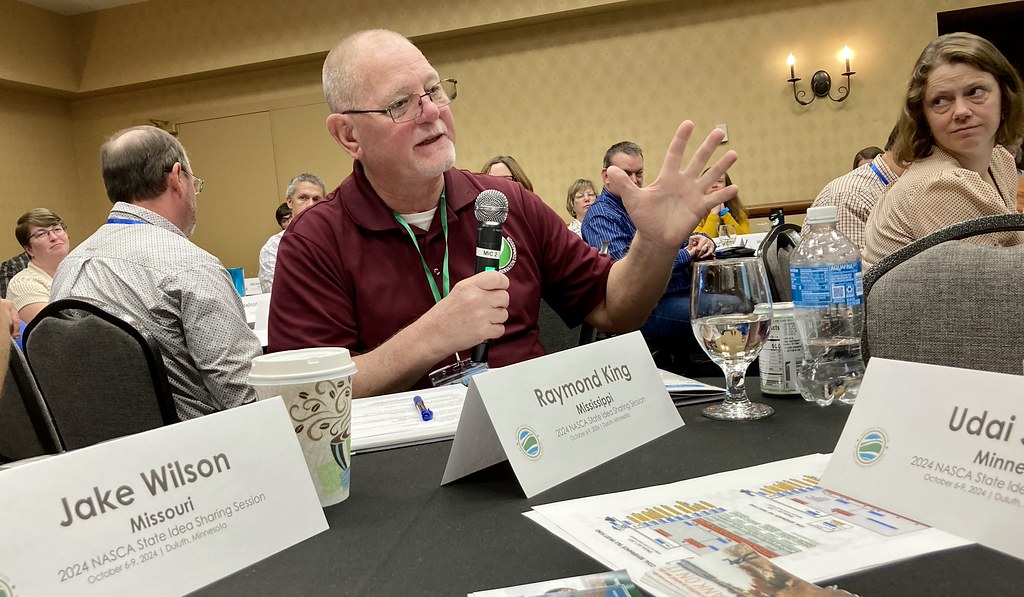
For more than two decades, that simple philosophy has guided the National Association of State Conservation Agencies’ State Ideas Sharing Sessions, where conservation professionals gather to exchange solutions, solve problems and learn from one another’s successes and failures.
What began in 2005 as a small gathering of six states has evolved into one of NASCA’s most valued annual events—and a national network for collaboration, professional development and leadership growth.
The program’s story is closely tied to the career and philosophy of longtime conservation leader and facilitator Ray Ledgerwood.
Ledgerwood spent decades working with conservation districts, state agencies and federal partners through the National Association of Conservation Districts (NACD) and the Washington State Conservation Commission, developing a belief that conservation partnerships work best when people candidly discuss common problems and practical experiences.
“My dad had two awards that he coveted,” Ledgerwood recalled. “One was Conservationist of the Year from our local conservation district, and the other was honorary FFA chapter farmer. You might say I was born into conservation work.”
By the early 1990s, Ledgerwood was involved in national conservation capacity-building efforts through NACD, helping facilitate strategic planning workshops with NASCA Executive Director Roland Geddes and Natural Resources Conservation Service partners across the country.
Through that work, they saw states facing many of the same challenges—training, funding, outreach and operations—yet often trying to solve them independently.
“We learned that the best thing we could offer was successful techniques, programs and activities that worked in another state,” Ledgerwood said.
That realization planted the seeds for what would become the State Ideas Sharing Sessions.
In 2004, while preparing for NASCA’s 2005 Seattle meeting, Ledgerwood and Washington State Conservation Commission organizers proposed a forum where conservation field staff could exchange successful approaches to training, program delivery, outreach and district management.
Six states agreed to participate in that first gathering: Washington, Oregon, Utah, Arkansas, Oklahoma and Montana. The group was small — about 10 or 11 people — but the format immediately clicked. “The participants were also the presenters,” Ledgerwood said. “Come and learn, but bring the best thing you’ve got going in your state that year.”
The sessions relied on short, 10-minute presentations focused on practical solutions rather than polished speeches. Participants exchanged templates and training materials that continued circulating between states long after the meetings ended.
Oklahoma Conservation Commission Assistant Director Lisa Knauf Owen attended that first Seattle session and immediately recognized the value of the conversations.
“What I discovered was that I was not alone in my challenges of working with local units of government,” Knauf Owen said. “We quickly found we all had so much in common as we started to share those challenges, solutions, frustrations and successes.”
Williams said the relationships formed through the sessions often became one of their greatest strengths.
“The sessions provide opportunities for each state to identify resource people in other states who are dealing with the same issues and concerns as they are,” Williams said. “The way Ray Ledgerwood organized the sessions promotes effective interaction and establishes a welcoming environment that makes participants feel comfortable sharing insights and asking questions.”
Once those connections are established, participants have trusted colleagues they can contact on other issues.
One example involved a series of Washington state “10-minute guides” — short educational handouts districts could review during regular board meetings. Oklahoma later adapted and expanded the concept into more than 25 topic guides used throughout the state.
“They provided the template and we were able to expand on those,” Knauf Owen said. “It became a quick review and learning opportunity as part of regular district duties.”
Williams said that kind of cross-state exchange is exactly what the sessions were designed to encourage.
“I’ve often used the expression ‘steal shamelessly’ to describe how the free exchange of ideas inspires states to adopt programs and approaches they learned about in the sharing sessions,” Williams said.
Williams cited North Carolina’s district report card initiative, inspired by approaches used in Alabama and Washington.
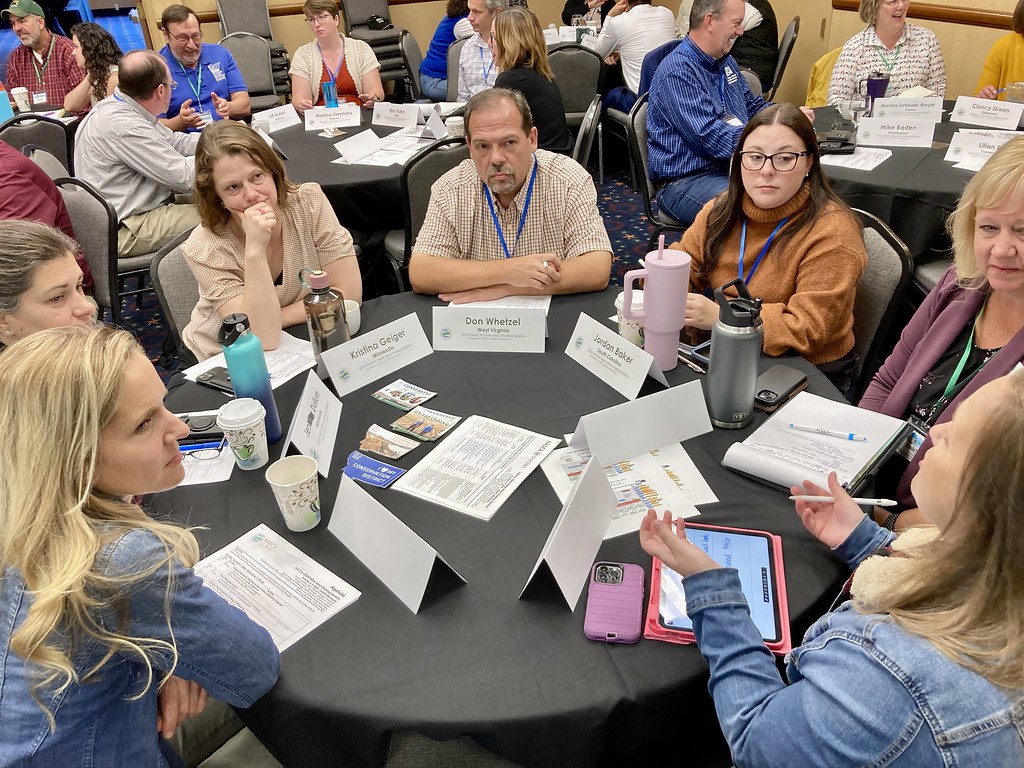
A more recent example emerged from the 2024 sharing sessions in Minnesota. After hearing participants discuss training challenges and opportunities, North Carolina Training Program Coordinator Brandy Myers launched the Conservation Training Exchange (CTX), a monthly virtual network that allows conservation trainers from across the country to continue sharing resources, training approaches and lessons learned well beyond the meeting itself.
The exchange started with about eight participants and has since grown to 34 representatives from state agencies, NRCS and partner organizations. Members meet monthly to discuss training priorities, mentoring, board development, adult-learning techniques and other topics while exchanging resources and supporting one another’s efforts to strengthen conservation training programs.
The Conservation Training Exchange illustrates how relationships formed during the sharing sessions continue to produce new resources, partnerships and innovations long after participants return home.
Successful approaches rarely stayed in one state for long. As Ledgerwood put it, “Someone would hear an idea and say, ‘We need one of those too.’”
As the gatherings grew, so did the range of people involved.
Originally known as the “Best Practices Sharing Session for Field Staff,” the gathering gradually expanded into the broader State Ideas Sharing Session. Accountants, communications specialists, trainers, program managers and eventually executive directors themselves joined the conversations. Even as participation expanded, the sessions remained focused on four core areas: district capacity- building and training; operations and funding; program delivery; and outreach.
But the sessions’ long-term influence came from more than the topics themselves. Equally important was the atmosphere inside the room.
Unlike highly formal policy meetings, the sharing sessions became known for candor, trust and humor.
“I think it’s the commonality in the room,” Ledgerwood said. “The people there are working with conservation districts every day. They understand each other’s challenges.”
Knauf Owen describes the culture as markedly different from a traditional conference setting.
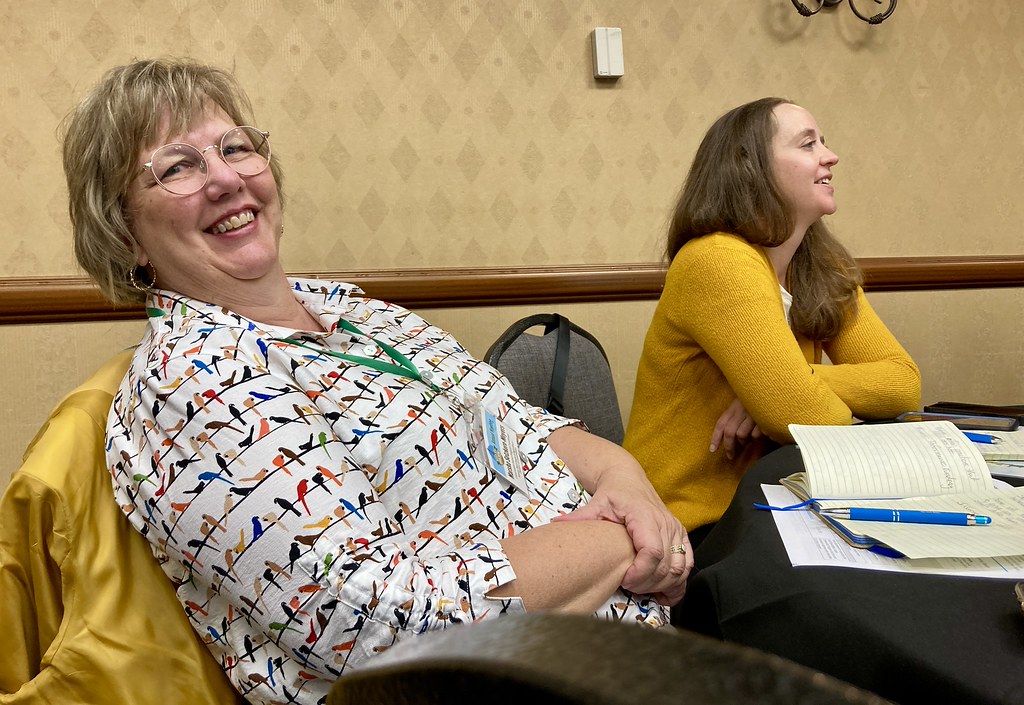
“The atmosphere is one of inclusion and acceptance,” she said. “The culture is open, honest dialogue. Everyone is encouraged to participate and tell their stories. We learn from one another, we laugh, and we enjoy each other’s company as we sort through all types of topics.”
Ledgerwood often summarized the philosophy behind the sessions with another favorite expression: “What you’re in on, you’re not down on.”
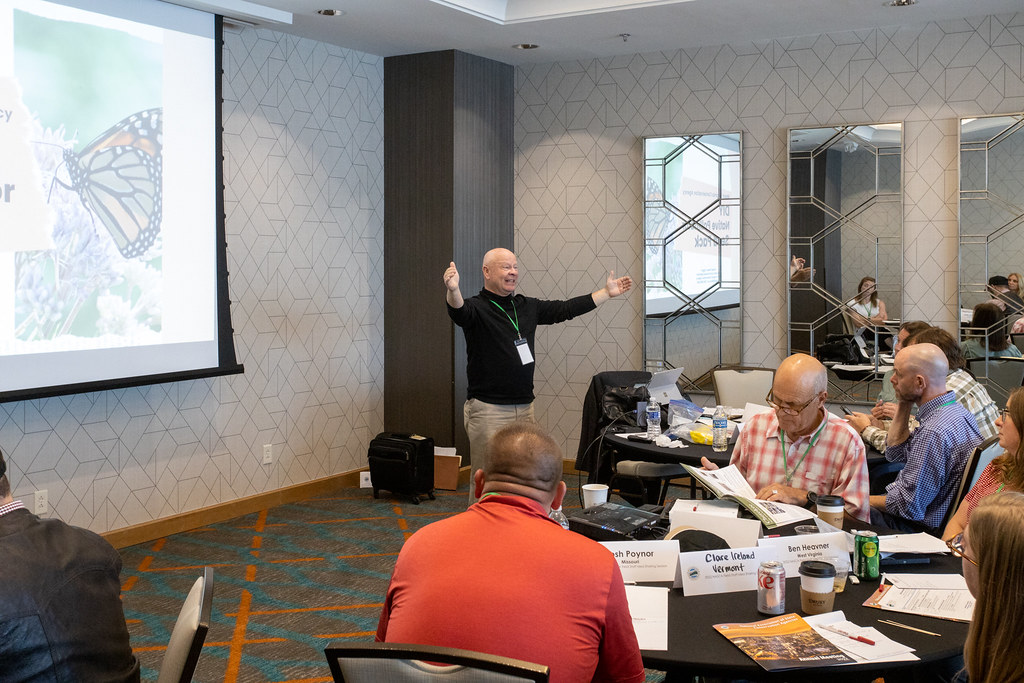
The idea is simple. When people have a voice in the conversation and contribute to solutions, they develop a sense of ownership in the outcome. Attendees are not passive listeners; they are active contributors helping one another solve problems and improve conservation programs.
That spirit has been embedded in the sharing sessions from the beginning. Every attendee is encouraged to share experiences, lessons learned and practical solutions.
Over time, the sessions became known informally within NASCA as “the fun room.” Executive directors attending nearby policy meetings often wandered in after hearing laughter next door.
The gathering earned a reputation as “the best two days we spend” because the conversations focused directly on the daily realities of conservation work.
“We’ve got a whole room full of cool kids,” Ledgerwood joked.
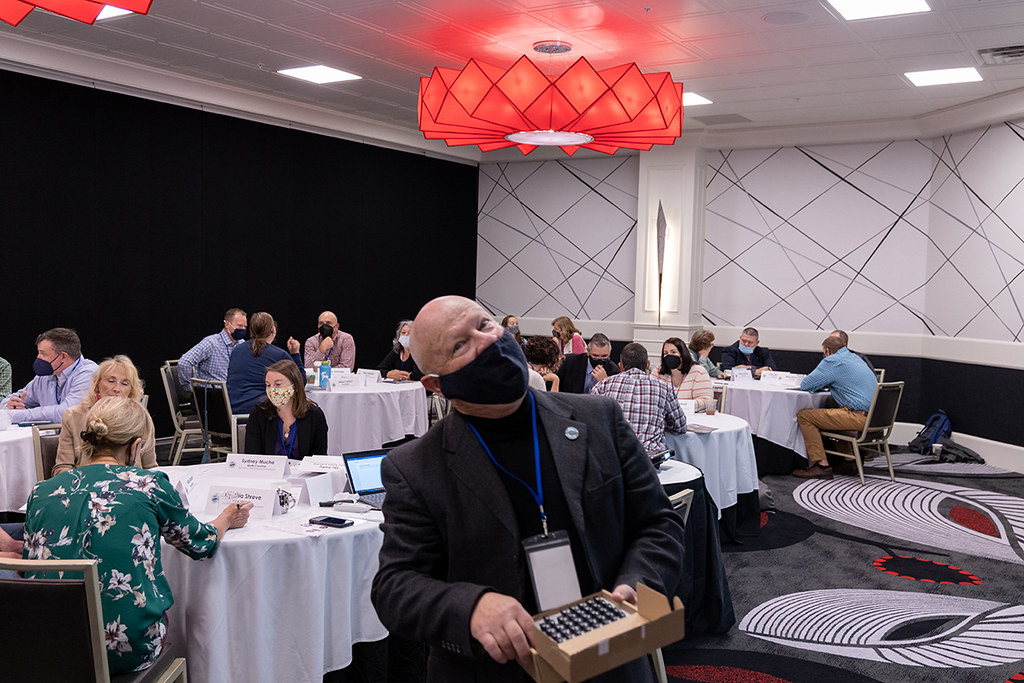
Participation continued to climb as the program gained momentum. By 2020, when the annual program temporarily moved online during the COVID-19 pandemic, more than 100 participants representing over 40 states joined the virtual gathering.
Since the program returned to in-person meetings, attendance has remained strong, with 60 to 85 participants attending annually. Ledgerwood estimates nearly 400 individuals have participated throughout the life of the program.
Williams believes the sessions have played an important role in strengthening NASCA itself.
“Initiating the State Ideas Sharing Session as part of the NASCA Annual Meeting was a transformative moment for NASCA,” he said.
Many former attendees have become executive directors and national conservation leaders.
Knauf Owen sees that as one of the sessions’ most important legacies. “I have seen participants in the sessions go on to be future leaders of their state agencies or move up in leadership, myself included,” she said.
That legacy reflects more than the lessons exchanged during the sessions.
The qualities participants remember most are not the presentations themselves, but the culture Ray Ledgerwood helped create: a community built on trust, collaboration and long-term professional relationships.
“My role is to make sure everyone is being heard,” Ledgerwood said. “I become a servant in the room, not the expert.”
In many ways, the State Ideas Sharing Sessions represent conservation partnerships at their best: meeting common challenges through practical experience and shared learning.
The values that defined the sessions also help explain why Ledgerwood’s peers chose to recognize him with the Rich Duesterhaus Lifetime Achievement Award, which honors individuals whose influence strengthened conservation partnerships across organizations and generations of leaders.
“I was so honored and just couldn’t believe the body of work that I did would receive that kind of recognition,” Ledgerwood said. “I was just busy doing the work and helping people where I could.” Not flashy. Not heavily scripted.
Just conservation professionals gathering in a room to share what works, help one another solve problems and quietly strengthen the national conservation part