Arkansas agriculture and natural resource officials say the state’s coordinated fight against feral hogs is starting to show measurable results after decades of rapid population growth and mounting damage to farms, forests and native ecosystems.
Feral hogs’ range expanded across the United States after 1990, spreading from 17 states to at least 38. Arkansas saw a similar pattern. According to Chris Colclasure, director of the Natural Resources Division at the Arkansas Department of Agriculture, wild pigs in the 1980s and early 1990s were largely confined to southern Arkansas, especially along the Saline and Ouachita Rivers and associated timberlands. At the time, most Arkansans rarely saw a feral hog outside those areas.

Over the next two decades, hogs spread north and east, moving into crop and pasture land. By 2009, residents had reported feral hogs in nearly every Arkansas county.
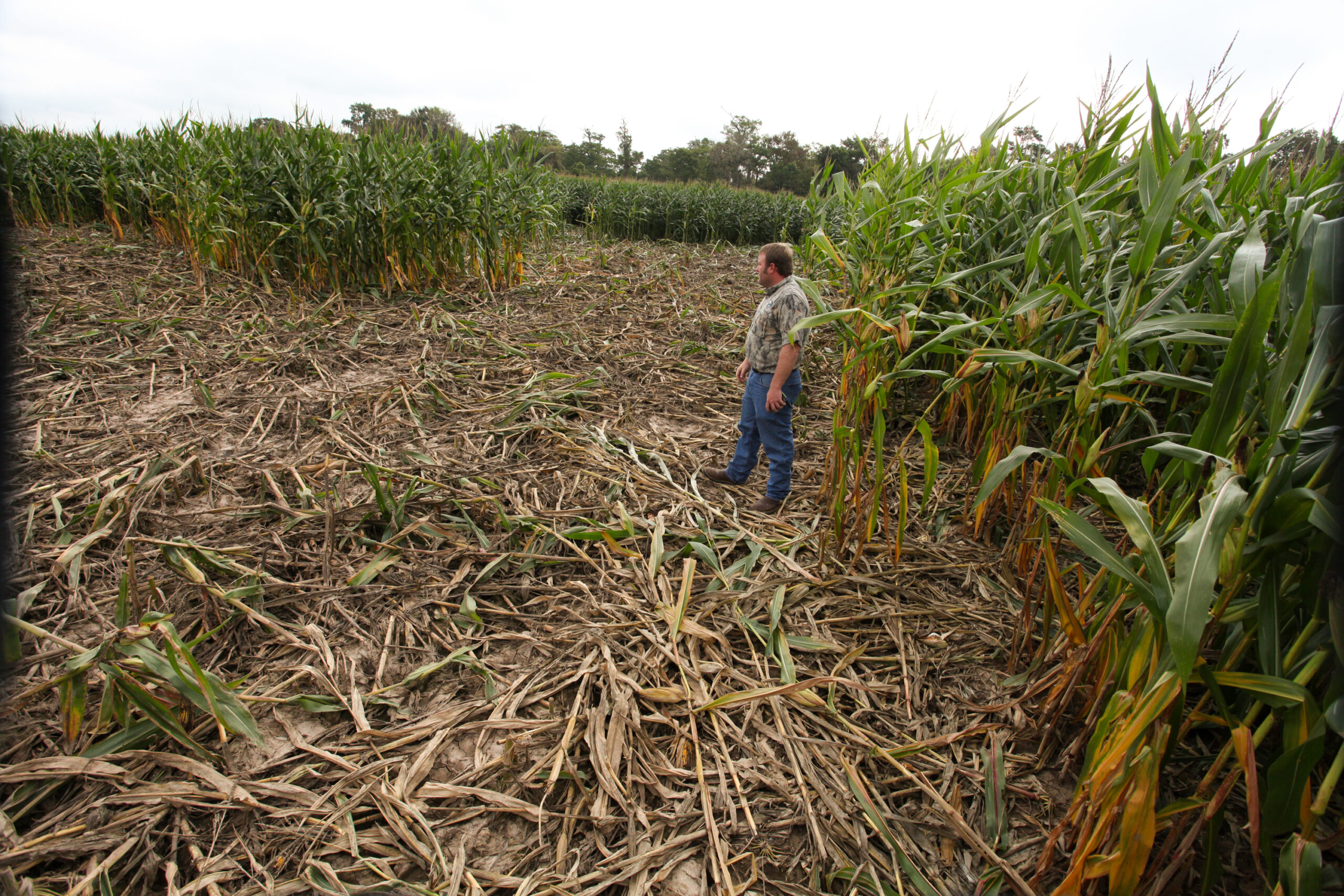
The damage from wild swine has been costly. The U.S. Department of Agriculture’s Animal and Plant Health Inspection Service (APHIS) estimates they cause about $1.5 billion in damage nationwide each year. Arkansas officials estimate losses of about $19 million annually, though more recent figures suggest that the total could range from $30 million to $41 million a year, including ruined crops, destroyed fencing and marred pastureland.
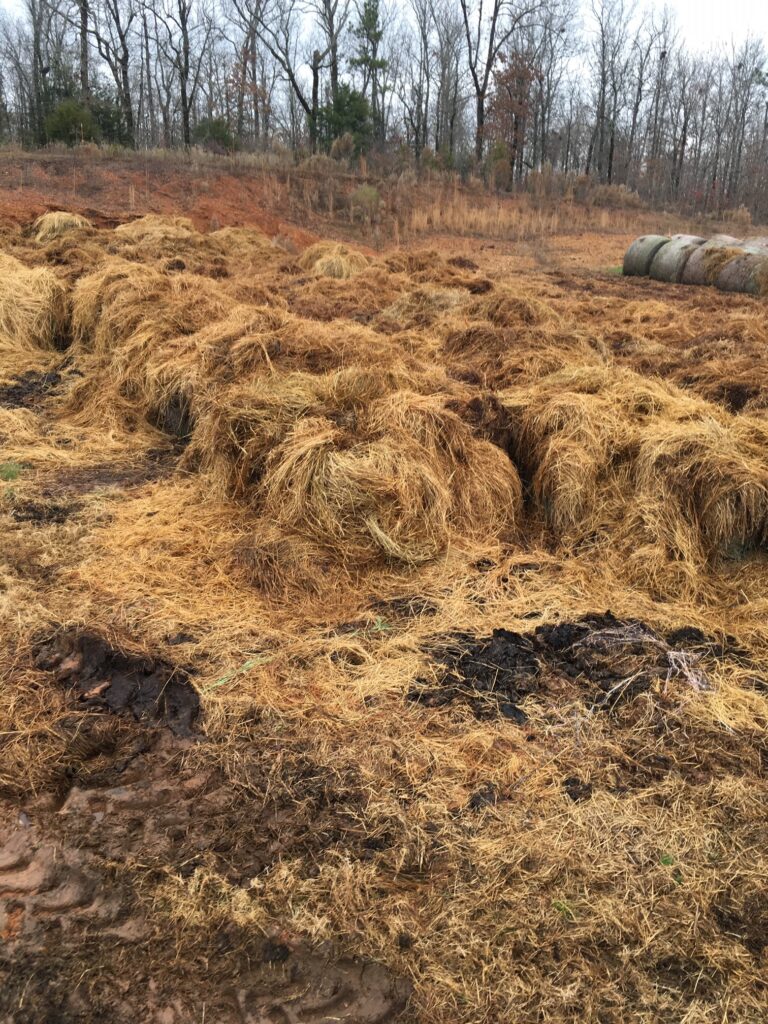
Beyond agriculture, feral hogs harm ecosystems by uprooting vegetation, eroding soil
and degrading water quality. They also compete with native wildlife for food and habitat. Equally concerning, they can carry and transmit at least 45 known diseases and parasites, including swine brucellosis, pseudorabies and swine influenza—posing serious risks to domestic livestock and, in some cases, humans.
By the late 1990s, Arkansas officials recognized the growing threat that feral swine posed, but early responses were fragmented and largely ineffective. In 2015, widespread reports of hog damage surged statewide, leading landowners to ask for help and prompting lawmakers to act.
In 2017, the Arkansas Legislature created the Arkansas Feral Hog Eradication Task Force, a coalition of 20 federal and state agencies and nonprofits. The task force spent its first year studying successful programs in other states, identifying gaps in Arkansas’s response and developing a unified statewide plan.
Task force members found that early eradication efforts lacked coordination, relied on outdated methods and were hampered by the high cost of advanced trapping equipment. The state also lacked dedicated, full-time personnel with specialized training in large-scale hog removal, leading many property owners to deal with the problem on their own.
A major shift came after Congress passed the 2018 Farm Bill, which created the USDA’s Feral Swine Eradication and Control Pilot Program (FSCP). Arkansas received a $3.4 million grant in 2019, enabling the hiring of full-time professional trappers through conservation districts and USDA APHIS Wildlife Services.
For the first time, the state moved from a patchwork of short-term fixes to year-round systematic eradication.
“Until the task force was created, we were not all working together to combat feral hogs,” Colclasure said in a 2019 Arkansas Game and Fish Commission (AGFC) article. He credited the task force with helping secure federal authorization and funding.
Professional trappers also worked to build relationships with landowners. By establishing trust, teams gained access to private lands that had previously been off limits, where hog populations continued to grow.
“It is important for everyone to work together to reduce and eventually remove this invasive threat,” said Robert Byrd, Arkansas state director for APHIS Wildlife Services, in a 2024 Arkansas Out of Doors article. “Trapping has shown to be the most effective tool we have, and any landowner that needs assistance can call Wildlife Services for help.”
State lawmakers reinforced these efforts in 2019 with passage of Act 991, which approved a $3 million appropriation for the Feral Hog Eradication Fund and strengthened penalties for illegal transport of live hogs.
Hunting the animals often worsens the problem because it scatters sounders, causing them to scatter and become harder to locate and remove. It can encourage illegal trapping and relocation, which accelerates their spread.
That 2019 law also authorized state-permitted aerial culling, allowing trained teams to remove hogs in remote areas that had long been difficult or unsafe to access from the ground.
Additional momentum came in 2023, when the Arkansas Game and Fish Commission launched a Conservation Incentive Program that reimbursed landowners for 75% of the cost of approved trapping equipment. In the program’s first year, participating landowners reported removing 6,693 hogs across 52 counties. Those efforts protected more than 900,000 acres of farmland and forest. Participants were required to submit removal data through a mobile app, improving statewide monitoring, and giving officials the clearest picture yet of the scope of the problem.
While the estimated population of feral hogs in 2026 is unknown, surveillance efforts are filling in some of the gaps. Feral hogs are capable of explosive reproduction—a single sow can produce up to 50 piglets in two years — meaning stable population numbers represent meaningful progress.
Field results are becoming more visible. In 2024, the Feral Swine Control Project removed more than 13,000 hogs from 483 properties totaling more than 500,000 acres. Participating landowners reported more than $2.5 million in damages prior to removal —losses officials say are now largely avoided.
Yell County landowner James Mitchell said in a May 14, 2025, AGFC article that he has seen a sharp reduction in feral hogs on his land, crediting the use of whole sounder trapping strategies implemented on both his property and adjoining land. Colclasure recalled that when Mitchell first introduced himself, he said, “My name is James Mitchell, and I have a small feral hog farm in West Arkansas” — a line that expresses with the humor the frustration many landowners felt at the height of the problem.
A significant administrative change in feral hog eradication was designating APHIS Wildlife Services as the primary point of contact for feral hog removal on private lands. Further, APHIS increased staffing in Arkansas from seven technicians in 2018 to 22 technicians and biologists by 2024, while launching targeted projects such as the Buffalo River Watershed Initiative and the Northeast Arkansas Elimination Project.
Officials caution that success remains fragile. More than 80% of Arkansas land is privately owned, making voluntary landowner participation essential to eliminating this invasive species. To support consistent guidance, the Arkansas Department of Agriculture released the Arkansas Feral Hog Handbook and developed a public dashboard tracking hog removals by county and year. In 2025, the dashboard was released as a public facing tool for monthly reporting, including more data from private landowners that keeps the public engaged and informed.
The One Big Beautiful Bill Act reauthorized the FSCP and provided funding through 2031. Congress directed that the pilot program be delivered through coordination among APHIS, the Natural Resources Conservation Service (NRCS), and State technical committees. Funding for the program is divided evenly between the agencies. NRCS currently has approximately $47 million in financial assistance available for delivery via grants to partners selected through a notice of funding opportunity.
Pilot projects will be limited to states with high feral swine populations as determined by APHIS and designated by APHIS as level 3, 4, or 5 for feral swine baseline funding. The states eligible to submit a pilot project are Alabama, Arkansas, California, Florida, Georgia, Hawaii, Louisiana, Mississippi, Missouri, North Carolina, Oklahoma, South Carolina, Tennessee, and Texas. Pilot project proposals are due in early January.
The task force also recently agreed to offer Kaput Feral Hog Toxicant as another option for feral hog control in specific parts of the state to complement trapping efforts. The rules for this program are currently going through the promulgation process.
Colclasure said other states experiencing rising hog populations should act quickly. He added, “Form partnerships, educate the public and industry, and build understanding about why this problem has to be addressed.”
Arkansas officials say the state has turned a corner, but they warn feral hog populations can rebound quickly if pressure eases. With steady funding, strong partnerships and growing public awareness, Arkansas is demonstrating that even one of the nation’s most destructive invasive species can be contained — but only with long-term, sustained effort.